Los Angeles gives us a climate of contrasts. Months of dry heat bake soils into hardpan, then a single atmospheric river tests every low spot in the neighborhood. Yards that look perfect on a clear Saturday can turn into shallow ponds by Sunday afternoon. At Ridgeline Outdoor Living, we design and build outdoor spaces that hold up to both extremes. That starts with drainage you can trust, shaped by the realities of Southern California soils, slopes, and storm patterns.
Why LA yards flood even when rainfall is “average”
On paper, the Los Angeles Basin does not receive a lot of rain by national standards. In practice, several local conditions stack the deck in favor of flooding. Much of our urban soil has a high clay content, especially in older neighborhoods where compaction from decades of construction has left a tight, slow-draining subgrade. When clay is dry, it repels water at first. When it finally hydrates, it swells and seals. Either way, surface water lingers.
Add dense development and you compound the problem. Roofs, driveways, and patios shed thousands of gallons during a storm. On a 2,000 square foot roof, a single inch of rain produces roughly 1,246 gallons. During winter systems that drop two to four inches over a day, downspouts can overwhelm small lawn areas and overtax planters. Hillside properties face another challenge: sheet flow. When the parcel upslope from you sends water overland, even well pitched yards can see flows that erode seams, undermine fence posts, and muddy pool decks.
A final factor is runoff routing. Many older homes rely on informal swales or undersized pipes that were never engineered for today’s intense, short-duration storms. Building codes and best practices have since improved, but properties often hold legacy conditions that need correction.
Start with a proper diagnosis
A yard that floods is sending a message. The patterns you observe dictate the solution we design. Before proposing French drains, channel drains, or major regrading, we look closely at how water arrives, pauses, and leaves your site.
Note where the first puddles form and how long they last. Watch for telltale silt fans that settle in depressions after a storm. Study where roof leaders discharge and whether water back-curls toward foundations. On sloped properties, look for rills carved into decomposed granite paths or mulch that migrated downslope. Inside hardscape, staining, efflorescence, and algae along expansion joints show persistent moisture. If infiltration is slow, a simple hose test will reveal it. Open the nozzle and mimic steady rainfall. If water ponds within a minute and remains more than 24 hours, the soil needs help beyond surface grading.
In the profession, we like to say that water chooses the path of least resistance. Your goal is to make that path visible and controlled. If you are unsure whether your property faces a systemic drainage problem, the following quick screen will help.
- Standing water remains on lawn or patio more than 24 to 48 hours after a storm. Downspouts discharge at grade within 5 feet of the house or garage. Soggy strips appear along fences, walls, or at the base of slopes. Patio joints weep white mineral deposits or grow algae in shaded lines. Mulch, gravel, or topsoil regularly migrates after moderate rainfall.
Grading: the first and often best fix
Every successful drainage plan begins at the surface. If the yard is not pitched to carry stormwater away, subsurface structures will work harder than they should. We usually target a fall of 2 percent away from foundations for the first 5 to 10 feet. That equates to a drop of about a quarter inch per foot. Beyond that, grades can soften to 1 percent where site constraints demand. The key is continuity. Even a small reverse pitch will hold water and defeat an otherwise sound design.
Some homeowners hesitate to regrade, worried about losing level lawn or disrupting existing plantings. In reality, precise grading often restores usable space. We spot raise lows with compacted base, feather transitions, and use subtle mounds to steer water into swales that look like part of the landscape. On tight infill lots, we may employ a low-profile concrete ribbon or a decorative steel edge to catch and guide flow across hardscape borders. Good grading also coordinates with future improvements. If you have been considering a new patio, pool, or outdoor kitchen, the subgrade work for those projects offers an ideal moment to correct drainage.
Surface drainage: swales, channels, and catch basins
Surface systems intercept runoff before it saturates soil. In Los Angeles, we favor vegetated swales and short, strategic runs of channel drain over excessive point inlets. Swales are shallow, broad depressions lined with turf or drought-friendly groundcovers that slow water, encourage infiltration, and protect against erosion. In a climate where water is precious, swales allow us to capture some rainfall for the landscape while still moving excess toward safe discharge points. They pair well with The Ultimate Guide to Drought-Tolerant Landscaping in Los Angeles because they hydrate root zones during rare storms, then sit dormant with minimal maintenance the rest of the year.
Channel drains solve a different problem. At garage thresholds, patio doors, and pool decks, flat surfaces often must meet buildings with only a slight slope. A recessed linear drain with an ADA-compliant grate can accept sheet flow across the slab and deliver it to a drain line. We set channel drains on a compacted base, ensure a consistent slope inside the channel, and connect them to appropriate outlets. Choose grates that balance aesthetics with open area. Stainless or polymer concrete units carry high flow while still looking refined in luxury settings.
Catch basins have their place where swales converge or in courtyards that sit lower than adjoining grades. We size basins generously and use leaf baskets to simplify maintenance. Location trumps quantity. Two correctly placed inlets outperform four scattered ones. Always think through the last leg of the journey. A catch basin that dumps to a pipe with no legal discharge invites backups and property damage.
Subsurface drainage: French drains, dry wells, and infiltration galleries
When soils trap water near the surface, a French drain gives it a path to travel. French Drains Explained: Protecting Your Property From Water Damage starts with trench dimensions. We typically cut trenches 12 to 18 inches wide and 18 to 36 inches deep, deeper in clay. We line the trench with nonwoven geotextile to keep soil fines out, lay perforated pipe with the holes oriented correctly, and surround the pipe with washed, angular gravel. The system must include inspection ports. Without them, you have no way to verify performance or jet the line if fines accumulate.
In tight urban settings where export is limited, we add storage through dry wells or modular infiltration chambers. A dry well is a buried volume that accepts water then slowly releases it into the surrounding soil. We calculate volume based on roof area and storm intensity. For a typical Los Angeles home, a well might range from 50 to 200 cubic feet, split into several smaller units if space is fragmented. Because clay soils infiltrate slowly, we often combine a dry well with an overflow that redirects excess to the street, parkway, or an approved dispersion area during large storms. The engineered combination handles frequent small rains with infiltration and spares you from flooding during major events.
Where slopes present enough head, daylighting remains the gold standard. A perforated subdrain that transitions to solid pipe and exits on a downslope face, protected by a rock energy dissipator, is reliable and easy to maintain. Not every site offers that luxury. When it does, we use it.
Protecting foundations and slabs
Many drainage conversations begin with a wet crawlspace or a musty garage. The simplest fix often involves redirecting roof leaders and ensuring that adjacent soil does not trap water against the building. We extend downspouts below grade immediately, use solid pipe for the first run to avoid seepage near foundations, and only convert to perforated pipe once we are well clear. At patios, we design concrete or paver installations with both slope and breaks. It is common to see a gorgeous stamped concrete slab with a dead-flat center. Water wicks through microcracks, then telegraphs as efflorescence. A discrete control joint paired with a linear drain avoids that aesthetic issue and protects the slab.
For homeowners comparing Paver Patios vs Stamped Concrete: Pros and Cons, permeability is part of the decision. Permeable pavers set on open-graded base allow rainfall to pass between joints into a storage layer. In fine-textured LA soils, we still include underdrains to prevent long-term saturation, but these systems dramatically reduce surface runoff. Stamped concrete has its place where cost or a seamless visual field matters. We then rely on pitch and edge drains. Either path works. The choice depends on budget, style, and soil behavior on your lot.
Hillsides, retaining walls, and slope stability
Retaining Walls for Hillside Properties: What Homeowners Need to Know begins with drainage. A wall without a drain is a liability. Hydrostatic pressure builds behind a wall during storms and can exceed the structural design load. We specify continuous perforated pipe at the footing level, wrapped in fabric and surrounded by drain rock. We separate backfill from native soil with geotextile to reduce clogging, and we provide weep holes through the face where appropriate. On tall walls, back drains step with the height. Every wall drains to daylight or to a collector that routes water to a safe outlet. If your yard already features a wall with no visible weeps and signs of staining or bowing, schedule an assessment promptly.
On natural slopes, we manage sheet flow with contour swales and micro-terracing. Planting is a structural tool. Deep-rooted native shrubs and grasses help knit soil, while jute netting protects exposed areas until vegetation establishes. Where space allows, a riprap-lined swale mid-slope interrupts velocity and gives water a stable pathway down the hill. For severe slopes, a geotechnical engineer may recommend subdrains at depth to intercept perched water tables that feed landslides. Those are specialized solutions. Even then, the core principle remains the same: move water predictably and relieve pressure.
Driveways, walkways, and curb appeal that works with water
The Most Popular Driveway Materials in Los Angeles often create sleek, modern surfaces. Without forethought, they also invite runoff problems. Monolithic concrete driveways tend to push water toward the street quickly, which can be acceptable if grades are correct and city guidelines are followed. Permeable pavers reduce runoff and soften the microclimate around the home. For 15 Driveway Paving Ideas to Improve Curb Appeal, we often include ribbon drives with center plantings, gravel bands along edges, and discreet trench drains at garage aprons. These elements look intentional and handle flow.
Walkways should shed toward planting whenever possible. A simple three-eighths inch rise over four feet carries water to a border bed where it can infiltrate. If space is limited, a slim slot drain doubles as a design accent. In contemporary landscapes, these narrow reveals in the hardscape carry a lot of water relative to their footprint.
Planting and soils that support drainage
Drought-tolerant does not mean water-averse. The Best Drought-Tolerant Plants for Los Angeles Yards thrive when roots receive deep, occasional moisture followed by a dry-out period. Poorly drained soils sabotage that rhythm. We often amend top 6 to 12 inches with compost to improve structure, then cap with mulch that stays put in rain. Mulch selection matters. Shredded bark locks together better than large nuggets, which tend to float and migrate. In swales, we favor hearty groundcovers like dymondia or native grasses that can tolerate brief inundation.
Vegetated basins bring another advantage. They catch nutrients that might otherwise wash into storm drains, keeping water features and pools cleaner. Speaking of water features, homeowners exploring 12 Water Feature Ideas for Luxury Los Angeles Backyards often ask about storm behavior. A smart drainage plan protects these investments, keeping runoff from carrying fines into basins where pumps would suffer.
Business Name: Ridgeline Outdoor Living
Address: 845 E Walnut St, Pasadena, CA 91101, United States
Phone: (626) 469-5822
Ridgeline Outdoor Living
Ridgeline Outdoor Living is a Pasadena-based landscape design-build company serving Greater Los Angeles with custom outdoor living, hardscape, and drought-tolerant landscape solutions. The company specializes in patios, retaining walls, outdoor kitchens, drainage, hillside projects, and turnkey landscape construction, handling projects from design and permitting through final build and warranty.
845 E Walnut St, Pasadena, CA 91101, USA
Business Hours:
- Monday – Saturday: 8:00 AM – 6:00 PM
- Sunday: Closed
Follow Us:
Artificial turf, natural sod, and the drainage conversation
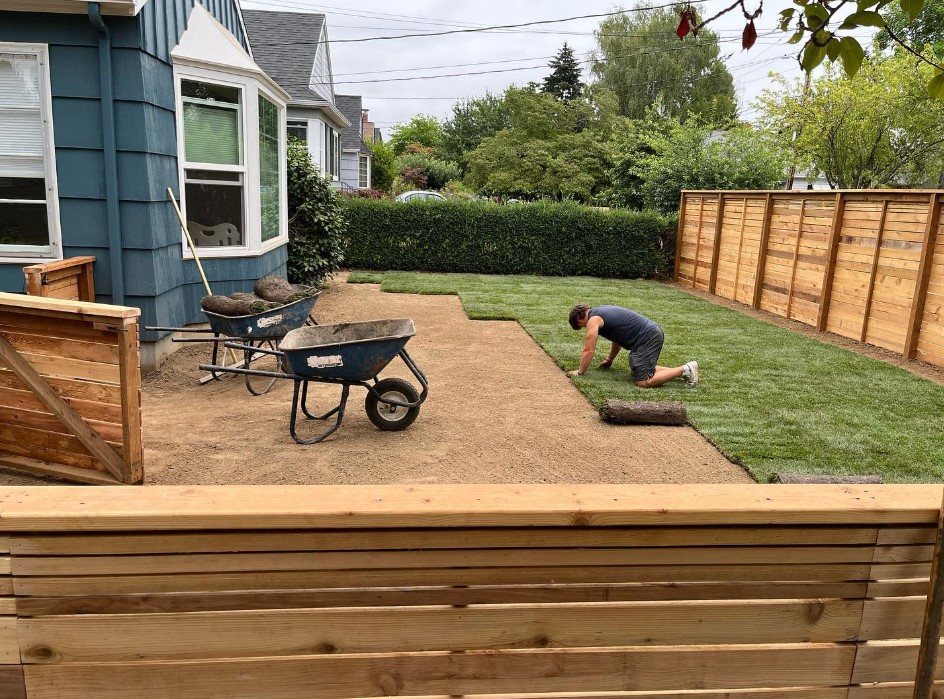
Artificial Turf vs Sod: What’s Best for Los Angeles Homes is frequently a budget and maintenance decision, but drainage should be part of the calculus. Modern turf systems use a permeable backing and sit on compacted base. If the base is too tight or the subgrade is impermeable, turf becomes a slick layer over a puddle. We design turf bases with open-graded aggregate and, for large fields or shaded corners, install underdrains to prevent persistent wetness. Natural sod breathes and can absorb a surprising amount of rain if the soil is prepared well, but it too suffers in compacted clay. Either way, good subgrade prep and integration with the larger drainage network determine success.
Integrating drainage into outdoor living and hardscapes
Los Angeles homeowners are investing in complete outdoor environments. Pergolas vs landscaping guides Covered Patios: Which Is Right for Your Home touches on how roofed structures change water movement onsite. A covered patio might introduce a new downspout and concentrated discharge, which means new routing. Outdoor kitchens bring utilities that do not like standing water. How Ridgeline Outdoor Living Designs Stunning Outdoor Spaces always begins with drainage concept sketches. Where does roof runoff land now, where will it land after improvements, and how do we shape the site to accept it?
Hardscaping choices affect performance and value. 10 Hardscaping Features That Increase Property Value frequently include permeable surfaces, integrated drains, and stacked-stone retaining that hides subdrain outlets with grace. For homeowners choosing between The Best Hardscape Materials for Southern California Landscapes, we weigh porosity, slip resistance when wet, maintenance needs, and compatibility with drainage components. A thoughtfully placed drain can disappear into a band of cobble or a shadow line under a floating bench.
Stormwater rules, permits, and neighborhood context
Cities across LA County encourage on-site retention where soils allow it, but every property sits within a broader drainage system. When we design, we comply with local stormwater ordinances, including rules that prohibit directing private runoff onto neighboring lots and require erosion control during construction. In hillside zones, additional requirements apply for grading, retaining walls, and subdrains. If your project involves more than minor surface changes, plan for permits and inspections. A good design anticipates review comments and folds compliance into the aesthetic.
Neighborhood context also matters. If your parkway floods or the curb inlet downstream clogs regularly, your private drainage may back up during heavy storms. We account for that risk with freeboard in basins and redundant overflows that route water safely even when the public system is taxed.
Cost ranges and real expectations
Homeowners ask, How to Prevent Yard Flooding With Proper Drainage Solutions, and what should we budget? Costs vary with access, soil conditions, and finish level, but we can set expectations. Simple downspout extensions and surface regrading to reestablish slope might fall in the low thousands. A modest French drain run with gravel and fabric, properly installed, often ranges higher depending on length, depth, and tie-ins. Adding catch basins and channel drains across a patio can add similar amounts. Permeable paver patios cost more than conventional concrete up front but can save on separate drainage infrastructure and provide ongoing benefits.
On hillsides, retaining wall drains are part of the wall budget, which depends on height, engineering, and facing materials. If a geotechnical report and deep subdrains are required, plan for professional fees along with construction. Durable, low-maintenance systems pay for themselves quickly if they prevent one episode of slab heave, wall failure, or interior water damage.
A day in the field: three common scenarios
A family in Studio City had a flat, shaded yard that turned slick after every rain. We found two downspouts dumping onto the lawn and a subtly low patio set flush to the threshold. The fix combined a linear grate across the patio, solid piping for the first 15 feet from each downspout, and a short vegetated swale that carried water to a small infiltration gallery. With a gentle regrade and turf base improvement, the yard now drains within an hour after storms.
In Pacific Palisades, a hillside property sent sheet flow into a decomposed granite path that carved out each winter. We installed a mid-slope rock-lined swale, added a back drain behind a short retaining wall, and planted the slope with deep-rooted natives. A small rock dissipator at the outlet prevents erosion where water meets the lower lawn. The slope stabilized, and the path surface has held through two rainy seasons.
In Pasadena, an older home showed efflorescence lines across a stamped concrete courtyard. The slab was nearly level and boxed in by walls. We cut a narrow slot drain along the long axis, connected it to a drain line that daylights at the parkway, and retextured the slab joints to blend the work. Because the site’s clay soil infiltrates slowly, we did not rely solely on infiltration. The visual changed little, but the performance changed completely.
Maintenance that keeps systems working
Most drainage failures occur not because the design was wrong but because maintenance lapses allowed blockages. A short, reliable routine keeps everything moving.
- Clean channel drain grates and leaf baskets at the start of the rainy season and after major storms. Flush French drain inspection ports with a garden hose annually to verify flow. Check downspout connections for leaks, especially at slip joints near grade. Rake mulch back into place and top up where migration exposed soil. Inspect slopes for new rills or exposed fabric that indicate concentrated flow.
If you notice that water movement has slowed, act before the next big system. A 15-minute cleanout prevents hours of shop-vac work inside a garage.
Planning drainage alongside upgrades
Homeowners exploring 10 Outdoor Living Ideas Transforming Los Angeles Backyards or 12 Backyard Entertainment Features Every Homeowner Should Consider sometimes treat drainage as an afterthought. In practice, the best time to get it right is while you build. Running underdrains below a new paver patio, shaping subtle swales around a future fire pit, or routing a pre-sleeved pipe under a path adds little cost during construction and saves disruptive trenching later. For Outdoor Kitchen Trends Los Angeles Homeowners Are Choosing, we plan for hose bibs and shutoffs in places that make rinsing grates and clearing debris easy. For Pool Landscaping Ideas for Los Angeles Homes, we protect deck drains from filter backwash and design planters that capture splash-out without waterlogging.
When upgrades are phased, we sketch the full drainage concept early. Even if you only build the first segment this year, setting the pitch and outlets to match the future plan prevents rework.
Choosing professional help
For modest issues, many homeowners can extend downspouts and reestablish surface slope on their own. Complex yards, hillsides, and long-standing flood patterns call for design-build expertise. 10 Questions to Ask Before Hiring a Landscape Contractor include specifics about drainage: how they calculate slopes, whether they include inspection ports, and how they design overflows for extreme events. How Ridgeline Outdoor Living Approaches Design-Build Landscaping focuses on tying aesthetic ambitions to practical performance, so you end up with a yard that looks beautiful and stays dry when the forecast turns.
Drainage touches everything outdoors. It protects structures, extends the life of hardscape, and keeps planting healthy. It also unlocks design freedom. When you know where water goes, you can stage 15 Luxury Hardscape Ideas Click here for more for Southern California Homes with confidence, from a sunken lounge to a board-formed retaining seat wall. The investment is not just defensive. It is foundational infrastructure that supports every other dream you have for the property.
If your yard shows the classic 10 Signs Your Yard Needs Better Drainage, do not wait for the next storm cycle. A clear diagnosis, well considered grading, and a mix of surface and subsurface tools will turn your landscape into a resilient, year-round asset. And when the skies finally clear, you will step outside to patios and paths that are ready for living, not mopping.