A driveway introduces a home long before the front door. In Los Angeles, where architectural styles range from Spanish Revival to sleek modern, a driveway that feels intentional can lift the entire facade. Pavers offer the most design flexibility of any hardscape surface, and with the right base work they hold up well to LA’s heat, mild winters, and the stop‑and‑go of daily traffic. Over the past decade designing and building hardscapes across the basin, I have seen small choices in color blend, joint width, or border detail change a street view from forgettable to photo worthy.
Below are 15 driveway concepts that consistently elevate curb appeal in Southern California. They work across budgets, from compact parkway homes in the city to wide frontages in the Valley. Each idea accounts for neighborhood context, drainage, material availability, and build logistics in LA.
What makes a driveway stand out in Los Angeles
Three factors do the heavy lifting. First, scale and geometry that respect the home’s architecture. Second, a surface pattern that reads clearly from the street rather than turning into visual noise. Third, edges and transitions that resolve cleanly into landscape beds, parkways, and walkways. The climate matters too. UV exposure bleaches some stones, and clay or concrete pavers heat differently under August sun. We also design around water. Many LA parcels sit on compacted fill with erratic percolation. Integrating permeable paver fields, trench drains, or discreet swales protects the garage and preserves the work.
1. Ribbon strips with drought‑tolerant infill
Ribbon driveways use two tire tracks of pavers with a planted or decorative band between. They date back to early LA neighborhoods and still look period correct on Spanish and Craftsman homes. Modern versions swap turf for gravel or water‑wise groundcovers. Decomposed granite locked with a stabilizer holds up to foot traffic. In sun‑baked zones, blue fescue, dymondia, or thyme creates soft texture that needs little irrigation. The wider center band also reduces material cost without feeling skimpy.
2. Herringbone set at 45 degrees
Herringbone excels under cars because the zigzag interlock resists shear. When set at 45 degrees to the garage, the pattern directs the eye to the entry and makes a narrow slab feel wider. I like a two‑piece system with a smaller format inside the herringbone and a larger rectangular soldier course as a frame. In coastal air where salt spray can patina metal fixtures, the irregularity of herringbone plays well with aged bronze or blackened steel gates.
3. Monochrome field with high‑contrast border
A restrained palette reads elegant from the street. Choose a medium gray or charcoal field paver, then run a one to two course border in a contrasting tone like limestone cream or deep basalt. A thin band between lawn and pavers solves edging and creates a tailored finish. This move pairs nicely with contemporary architecture that uses crisp lines and neutral tones. In bright sun, darker borders should have a textured surface to avoid glare.
4. Permeable pavers with hidden storage for water
Many lots slope toward the house, and some neighborhoods see short but heavy storm bursts. Permeable pavers over an open graded base capture runoff and release it into soil. We often create an underground storage bed under the apron and connect roof leaders through a filter to the same reservoir. The driveway still looks refined, but your property retains more water instead of sending it down the street. If you have noticed puddles that linger, this approach pairs well with the guidance in French Drains Explained: Protecting Your Property From Water Damage.
5. Mixed textures for Spanish and Mediterranean homes
Terracotta tones, tumbled edges, and cobble insets echo historic streets without going kitsch. A field of warm buff or clay colored pavers set in a running bond, punctuated by three or four cobble diamonds, feels period appropriate. We avoid heavily embossed faux‑stone joints that trap grime and age badly. Instead, real texture comes from genuine tumble, split face borders, and sand‑set installation that lets joints breathe. Flank with The Best Drought‑Tolerant Plants for Los Angeles Yards to keep irrigation low near the driveway.
6. Large format units for modern facades
Oversized pavers, often 18 by 36 or 24 by 24 inches, give a gallery‑calm presence. Joints align with door mullions and window heads to create visual order. These installations demand a precise base, since any deviation telegraphs through. I like a light sawcut control joint 8 to 10 feet on center beneath the sand bed to minimize reflective cracking in the base over time. For hillside streets, we add fine broom texture or a shot‑blasted surface to maintain tire grip.
7. Driveway walkouts that double as entertaining zones
When the driveway sits adjacent to a side yard or front patio, we extend the paver field as a multifunction apron. Pull the grill and a small bar cart out on weekends, then park during the week. This is where Paver Patios vs Stamped Concrete: Pros and Cons becomes a practical question. Pavers allow spot repairs and tolerate kitchen grease better, while stamped slabs have fewer joints for sweeping. For Los Angeles families landscaping guides who host often, pavers typically win on longevity and flexibility.
8. Geometric inlays that read from the street
A subtle compass rose, diagonal banding at the apron, or a centered medallion near the garage can break up a long field. The key is restraint. Two to three contrasting pieces laid flush with the field keep the surface car friendly. We pull proportions from the home’s fenestration and porch columns, not from catalog art. Done right, the inlay looks like it belongs, not like a logo.
9. Parkways with artificial turf accents
The thin strip between sidewalk and curb can look tired. Artificial turf installation in these parkways has become popular, especially where street trees compete for water. When bordered by a clean paver mow strip, the effect is lush without irrigation overspray onto the driveway. Artificial Turf vs Sod: What’s Best for Los Angeles Homes? Depends on use. For a small, hot parkway, high‑quality turf wins. For larger front lawns with deep shade and kids or pets, sheet mulch and drought‑tolerant plantings often beat both.
10. Split drive with motor court
Wide lots can handle a split layout, where the driveway forks into a small motor court. We design the court as an outdoor room with a central accent surface, often a different paver that nods to an interior rug. Retaining walls for Hillside Properties: What Homeowners Need to Know applies here if you cut into a slope to create space. Proper drainage behind the wall, rated geogrid, and an engineered section prevent the classic bowing you see on older properties.
Business Name: Ridgeline Outdoor Living
Address: 845 E Walnut St, Pasadena, CA 91101, United States
Phone: (626) 469-5822
Ridgeline Outdoor Living
Ridgeline Outdoor Living is a Pasadena-based landscape design-build company serving Greater Los Angeles with custom outdoor living, hardscape, and drought-tolerant landscape solutions. The company specializes in patios, retaining walls, outdoor kitchens, drainage, hillside projects, and turnkey landscape construction, handling projects from design and permitting through final build and warranty.
845 E Walnut St, Pasadena, CA 91101, USA
Business Hours:
- Monday – Saturday: 8:00 AM – 6:00 PM
- Sunday: Closed
Follow Us:
11. Curbless edges into gravel or planting
A square concrete curb around a driveway interrupts the landscape. Instead, we taper the paver base into a compacted gravel shoulder that drains or into a low water planting bed. This curbless detail feels custom and avoids picked tires. Plants like Westringia, lomandra, and manzanita can handle reflected heat. Where neighbors still hose their lawns, this approach also sheds incidental water cleanly into permeable zones.
12. Color blends that hide tire tracks
From a maintenance standpoint, multitone blends perform better. A field that mixes three complementary colors hides light oil drips and dust. In the San Fernando Valley, where summer highs cook oils out of asphalt streets, a cooler paver blend reduces heat soak into the garage. We avoid very light creams where shade trees drop tannins, since yellowing shows easily on pale surfaces.
13. Integrated lighting along the drive
Low profile fixtures set into borders or recessed in adjacent walls make the driveway safer and more dramatic. We prefer warm 2700 to 3000 Kelvin lighting that flatters stucco and stone. Fixtures should be brass or powder coated and rated for coastal conditions if you are west of the 405. For more detail, see 10 Outdoor Lighting Ideas for Los Angeles Landscapes and steer clear of 10 Outdoor Lighting Mistakes That Reduce Curb Appeal, such as glare bombs near the street.
14. Aprons that signal arrival
A textured or contrasting apron at the sidewalk announces the entry and frames the property. On city streets, an apron detail softens the transition from public to private space. We coordinate with The Most Popular Driveway Materials in Los Angeles to ensure the apron feels consistent with neighborhood standards. Where the city maintains a concrete gutter, we respect expansion joints and utilities, and we confirm whether a permit is required for apron modifications.
15. Perimeter banding that ties to the front walk
Curb appeal increases when surfaces speak to each other. Running the same soldier course along the driveway, front walk, and porch step celebrates the approach to the home. A single material echoed in three places often looks more expensive than a lot of different finishes. This is one of 10 Hardscaping Features That Increase Property Value because it gives cohesion with modest added cost.
Choosing the right paver material for LA conditions
Not all pavers behave the same in sun, vehicle use, or on a hillside. Clay, concrete, and natural stone pavers are all viable. The best choice depends on the home’s style, budget, and performance priorities.
- Clay brick pavers: Rich color that resists fading, classic on historic homes, slightly more prone to chipping at edges under tight turning. Concrete interlocking pavers: Broadest range of shapes and colors, excellent interlock, strong value, watch for lower quality mixes that fade faster. Large format concrete slabs: Clean modern look, fewer joints, demand an exacting base, heavier to handle which can raise labor. Natural stone pavers: Luxurious and timeless, higher cost and variable thickness, choose slip resistant finishes for slopes. Permeable pavers: Similar looks to standard units, designed with larger joint spacers to allow infiltration, require specific open graded base.
This short list covers most use cases we encounter from Brentwood to Pasadena. If you are wrestling with blend and format decisions, browsing 15 Paver Patio Designs Los Angeles Homeowners Love can spark ideas that translate nicely to driveways.
Drainage, slopes, and the tricky parts no one sees
LA driveways often sit above basements, finished garages, or slab‑on‑grade rooms. Water that gets under the assembly can migrate toward interior spaces. We address that in three ways. First, we pitch the surface a consistent 1 to 2 percent to the street or a collection point. Second, we separate the driveway plane from adjacent planters with a membrane and a perforated drain when soils are clay heavy. Third, we use open graded base rock under permeable fields to store and dissipate stormwater.
On hillside streets, code enforcement pays attention to retaining walls and driveway visibility. The Complete Guide to Hillside Landscaping in Los Angeles and How to Solve Common Yard Drainage Problems both apply when the drive hugs a slope. Where a cut is required, we work with an engineer to specify walls and anchor them into competent soil. Short seat wall style edges are tempting, but they are still retaining and need drainage fabric, weep holes, and clean aggregate behind them. Skipping those details is why you see staining and tilt on older walls.
What driveway projects cost in Los Angeles
Budgets vary with access, demolition, base depth, and material selection. Most front driveways we build land between 18 and 40 per square foot all‑in, which includes demo, base, pavers, edging, and standard drainage. Permeable systems add 5 to 12 per square foot for open graded rock and excavation. Natural stone or oversized slabs can push into the 45 to 70 per square foot range due to material and handling. Complex site work, like underpinning a failing edge or adding a French drain run to the street, sits outside those ranges. What Does Hardscape Construction Cost in Los Angeles? Remains one of best landscaping companies LA the most common questions we field, and the honest answer is that square foot pricing sets a baseline, but the site tells the full story.
A simple planning checklist before you start
- Confirm property lines and easements, especially near sidewalks or shared drives. Map existing drainage and plan for where the water will go during heavy rain. Test turning radii if you have a large vehicle or a tight garage approach. Choose finishes that match the home’s architectural era and color palette. Decide which areas should be permeable versus solid based on soil and slope.
A half day spent on these five items often saves weeks of rework later.
Tying the driveway into a bigger outdoor plan
A standout driveway rarely lives alone. Many homeowners decide to refresh the front walk, add low walls, or upgrade plantings at the same time. Why Drought‑Tolerant Landscaping Is a Smart Investment becomes clear when you replace thirsty strips of grass that spray onto fresh pavers with a water‑wise palette. For clients reimagining both front and rear yards, we often build driveways that borrow details from backyard living spaces. The lines between 10 Outdoor Living Ideas Transforming Los Angeles Backyards and the front approach can blur in the best way when materials, lighting, and planting speak a consistent language.
If your project includes a side yard extension, a gate, or a utility pad, consider future upgrades. For example, if an outdoor kitchen is on the horizon, pull a sleeve for gas or conduit under the driveway now. Outdoor Kitchen Trends Los Angeles Homeowners Are Choosing often require dedicated electrical and better drainage around prep areas. Integrating those pathways up front is inexpensive compared with coring under hardened surfaces later.
Maintenance that keeps pavers looking sharp
Concrete and clay pavers benefit from light pressure washing once or twice a year. Sweeping polymeric sand into joints after heavy cleaning keeps the field tight. Where street trees drop messy fruit or sap, a diluted enzyme cleaner helps without etching the surface. Sealers are optional. We specify breathable penetrating sealers on drives under shedding pines or where oil drips are common. Film forming sealers look glossy on day one but can haze in coastal humidity, so we use them sparingly.
Tire scuffs on darker pavers usually fade under UV within a week. Oil drips respond to absorbent poultices if addressed early. If a section suffers real damage, say from a plumbing trench, pavers can be lifted and reset. That ability to make a tidy surgical repair is one reason they outlast many stamped slabs over decades.
Permits, utilities, and working in tight neighborhoods
Within the city of Los Angeles and many nearby municipalities, changing a driveway apron or working in the right of way requires a permit. Projects inside the property line usually do not, unless you modify drainage that discharges to the street or handle more than a modest amount of soil on a hillside. We call for utility locates on every job. Too many older LA homes still have shallow water lines or unknown irrigation runs. On tight streets, we plan staging so neighbors can get in and out, and we schedule deliveries to avoid school traffic. Most driveway replacements take five to eight working days for a typical 600 to 900 square foot job, including demo, base, and install. Permeable systems and complex borders add a few days.
How Ridgeline Outdoor Living approaches design‑build
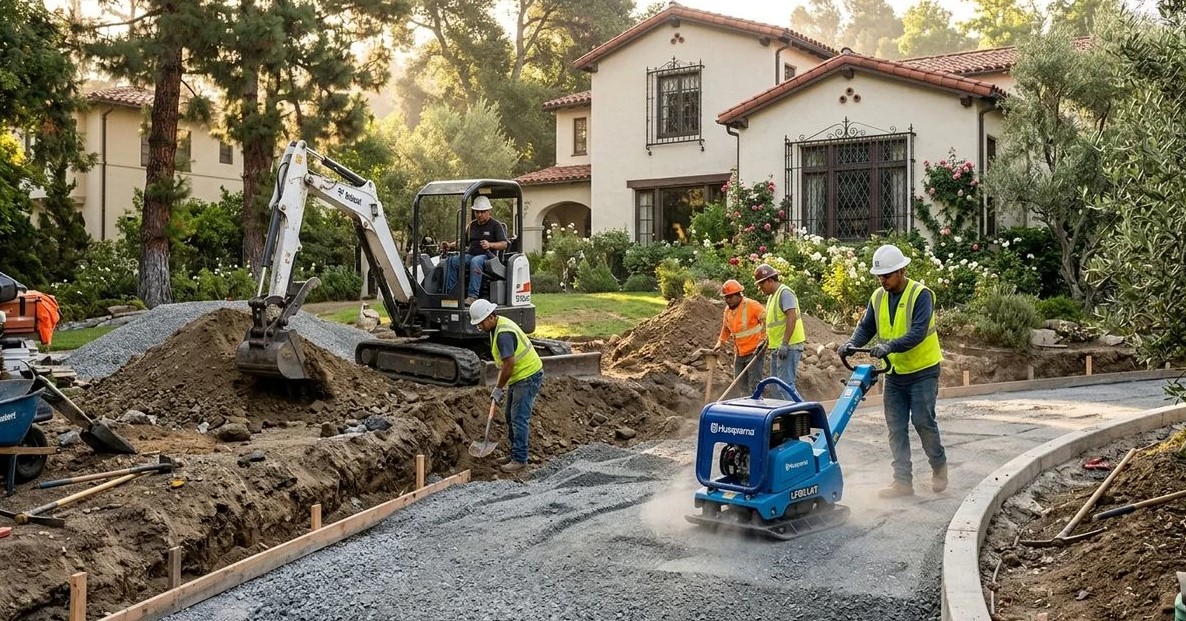
Driveways succeed when design and construction talk to each other from day one. How Ridgeline Outdoor Living Approaches Design‑Build Landscaping is simple. We survey the site, model the slope and constraints, then sketch pattern options that align with the architecture and budget. Clients often react to full scale mockups on site, where we lay a dozen pavers to test joint lines and borders. On the build side, our crews prioritize base prep. We compact in thin lifts, check pitch with lasers, and proof roll before any paver touches the ground. It sounds obsessive, but a single low spot will collect water and age a driveway prematurely.
We also consider the street view. If the neighbor to the north has a tan slab and to the south a dark asphalt strip, we choose a middle tone that feels at home. When a client asks for a bold look, we test it against 10 Ways to Create a Resort‑Style Backyard at Home and 12 Outdoor Living Features That Add the Most Value to ensure the investment improves market appeal, not just personal taste.
When to integrate walls, gates, or drainage structures
On sloping lots or deep setbacks, a driveway can benefit from low retaining, a motorized gate, or subsurface drainage. The Complete Guide to Retaining Walls in Los Angeles and How to Choose the Best Retaining Wall Design for Your Property come into play if you are correcting grade or widening a drive. For privacy and security, a sliding gate with a clean track recessed into the paver border avoids trip points and reads minimal. If you fight seasonal flooding, How to Prevent Yard Flooding With Proper Drainage Solutions outlines swales and catch basins that we regularly anchor into paver fields. When properly detailed, these utilities disappear visually.
Bringing the ideas together on your block
Not every property can or should deploy all 15 ideas. The right solution respects your architecture, the slope, the way you park, and how you want the home to feel as you arrive. A mid city bungalow with a narrow lot may benefit most from ribbon strips and a crisp border. A Hollywood Hills modern may come alive with large format slabs, curbless planting edges, and warm perimeter lighting. A Valley ranch with room to spare can build a split motor court with a textured apron that turns the daily arrival into a small event.
If you are planning a broader renovation, look at 10 Backyard Upgrades Worth the Investment and 12 Backyard Entertainment Features Every Homeowner Should Consider to coordinate front and rear work. The goal is a property that performs well day to day and makes a strong impression when it matters, whether that is a family gathering or a future sale.
Los Angeles rewards thoughtful detail. Pavers give you a toolbox of scale, texture, color, and pattern that can be tuned to your home and block. With a stable base, proper drainage, and a design that understands proportion, your driveway can become more than a place to park. It becomes part of the welcome.