Every successful pool landscape in Los Angeles begins long before the shovel hits the soil. It starts with sunlight angles, wind patterns, and the way sound moves through a yard at dusk. When we design around water, we think about how the pool will feel at 7 a.m. In February as much as 4 p.m. In August. We account for splash zones, sand from nearby beaches that tracks onto patios, and the Santa Ana winds that can turn a pleasant evening into a debris event. This is the quiet work that makes a space look effortless once it is built.
For two decades building in neighborhoods from the Flats to the Foothills, Ridgeline’s approach has centered on three constants: climate intelligence, top Los Angeles landscapers material discipline, and the choreography of how people actually live outside. Behind the glassy reflection of a new pool, there are hidden drains, soil engineering, and plant choices tuned to a city that expects beauty without waste. What follows is a distillation of the hard lessons and small touches that consistently deliver poolside spaces that hold up to LA’s sun, slopes, and social life.
Begin with the site you have, not the one in the brochure
Pools magnify site conditions. A flat San Fernando Valley lot will radiate heat onto deck surfaces long after the sun sets. A hillside in Silver Lake might look breezy and cool, yet pull afternoon glare straight into a seating nook. Before design, we map the sun path with seasonal angles, note neighbor sightlines at standing and seated eye levels, and watch wind over the course of a week. If we see ash leaves on the patio every morning, we know to build in leaf traps and select skimmers with larger baskets. If a west exposure bakes the deep end by 2 p.m., we introduce filtered shade near the shallow lounge rather than over the entire deck.
Los Angeles also asks for smart water use. The Ultimate Guide to Drought-Tolerant Landscaping in Los Angeles isn’t just a reading assignment, it is a design mandate. Pools can be remarkably water efficient compared to lawns when covered, but the surrounding landscape has to be built for drought, not merely labeled that way. We stage irrigation in hydrozones, choose surfacing that does not trap heat, and avoid plantings that drop heavy organic matter into the water column.
Hardscape at water’s edge: where beauty meets bare feet
The line where deck meets coping is one of the most worked edges in the yard. It must be cool enough for bare feet in August, grippy enough for wet heels, and tolerant of chlorine, salt, and sunscreen.
Material selection often comes down to trade‑offs. Poured concrete is clean and cost effective, but poorly planned control joints telegraph through the design and can lead to visible cracking, especially on expansive Valley soils. Stamped concrete serves certain aesthetics but tends to get slick when sealed for stain resistance. Paver patios are having a moment in Los Angeles for good reason. They offer micro‑movement that resists cracking, allow spot repairs, and can be permeable. Many of the 15 Paver Patio Designs Los Angeles Homeowners Love use large‑format porcelain or concrete pavers set over an engineered base with polymeric joint sand that inhibits weed growth yet drains.
Natural stone remains the benchmark. Dense limestones and quartzites stay cooler than many granites. We avoid highly veined travertines at the waterline due to potential spalling from freeze‑thaw in LA’s inland valleys, rare but not unheard of. Porcelain pavers mimic stone with lighter weight and high slip resistance, often rated above 0.6 on the coefficient of friction scale. For pool coping, a bullnose eases contact on shins, while a square edge reads modern and crisp. We temper razor‑sharp miters to a slight ease for durability and safety.
Thermal comfort is as important as looks. Ipe and thermally modified ash deck boards give exactly the right underfoot yield, yet they heat up quickly in full sun. In Playa Vista we switched to a porcelain plank that looks like wood, saving bare feet a 10 to 15 degree surface temperature swing at 4 p.m. Mid‑summer.
Business Name: Ridgeline Outdoor Living
Address: 845 E Walnut St, Pasadena, CA 91101, United States
Phone: (626) 469-5822
Ridgeline Outdoor Living
Ridgeline Outdoor Living is a Pasadena-based landscape design-build company serving Greater Los Angeles with custom outdoor living, hardscape, and drought-tolerant landscape solutions. The company specializes in patios, retaining walls, outdoor kitchens, drainage, hillside projects, and turnkey landscape construction, handling projects from design and permitting through final build and warranty.
845 E Walnut St, Pasadena, CA 91101, USA
Business Hours:
- Monday – Saturday: 8:00 AM – 6:00 PM
- Sunday: Closed
Follow Us:
Pool mosaics and interior finishes can nudge water color from sky blue to deep lagoon. Dark interiors warm faster and show fewer small leaves, yet they amplify surface glare. Light interiors sparkle and brighten tight courtyards, but they can show stains more readily if chemical balance is neglected. None of these are right or wrong. We show clients full‑size wet samples, not catalog squares, because under LA light, nuance matters.
Poolside material selection cheat sheet:
- Prioritize slip resistance above 0.6 wet, verified from the manufacturer. Test a hose‑soaked, sun‑warmed sample barefoot at 3 p.m. Before buying. Choose coping with a tactile edge - eased square or bullnose - to prevent chipping. Keep grout or joint colors mid‑tone to disguise inevitable dust. Use breathable penetrating sealers, not glossy topcoats, near splash zones.
Under the deck: drainage that disappears
Water around a pool does not only come from the sky. It comes from cannonballs, snow cone spills, and weekly rinses. The deck must drain without telegraphing function. Our default slope is 1 to 1.5 percent away from the pool toward landscaped zones or linear slot drains. We bury extra capacity for storm events that come in pulses. French Drains Explained: Protecting Your Property From Water Damage covers the basics, but around pools we often pair a linear slot drain along the coping with a subsurface French drain below planters. This separates clean splash water from soil‑laden runoff, reducing clogging.
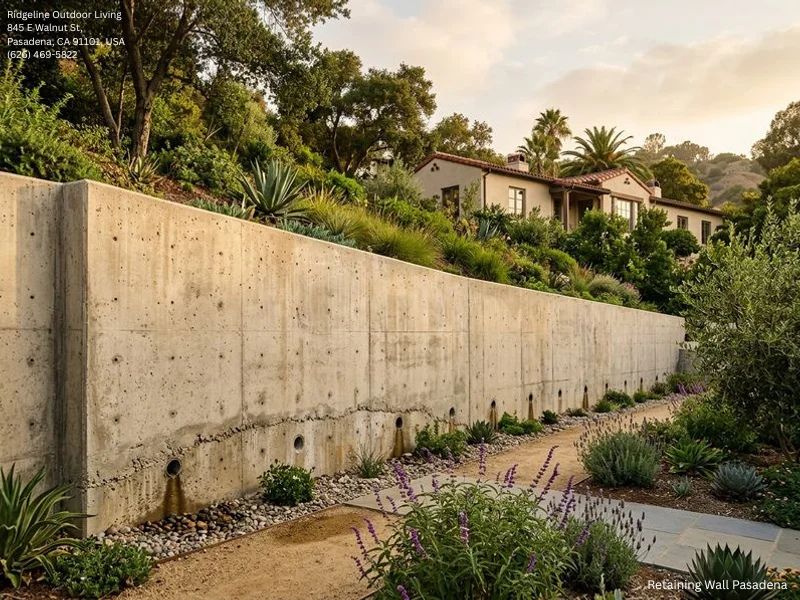
On hillside properties, retaining walls become part of the hydrology. Retaining Walls for Hillside Properties: What Homeowners Need to Know is more than theory when a wall holds back a cut below a spa. Weep holes, waterproofing membranes, and subdrains are non‑negotiable. The Complete Guide to Retaining Walls in Los Angeles underscores permits and engineering, both of which we handle up front to avoid mid‑build surprises. Where a pool butts into a slope, we often add a gravel chimney behind the wall tied into the property’s main drainage spine so that no hydrostatic pressure builds against the shell.
We watch where downspouts terminate. Routing roof water onto a pool deck is an invitation to staining and surface wear. If the yard is flat and clay heavy, we install gravity hose bib drains or sump‑assisted systems to get water to the street. How to Prevent Yard Flooding With Proper Drainage Solutions and How to Solve Common Yard Drainage Problems both point to the same rule: move water decisively.
Planting for water, wind, and minimal mess
The best pool is the one that stays inviting without a weekend of vacuuming. Plants around water need to be drought tolerant, noninvasive, and clean. The Best Drought‑Tolerant Plants for Los Angeles Yards is a long list, but poolside we focus on structure and texture. Architectural aloes, Aeonium arboreum, and Agave attenuata create sculptural interest without sap drip or thorn hazards if placed with care. We avoid aggressive spines within 3 to 4 feet of common circulation paths.
For soft screening, consider Podocarpus macrophyllus, Carolina cherry laurel in hedged form, or clumping bamboo like Bambusa textilis Gracilis, mindful of root barriers. Where saltwater pools are present, we pick salt tolerant selections such as Myoporum parvifolium as groundcover away from splash and Westringia fruticosa as a light, cloudlike hedge. Against walls, espaliered citrus offer fragrance and fruit with minimal drop if maintained. We site bee‑heavy pollinators away from the primary lounging zone and use night‑blooming jasmine sparingly to avoid overpowering scent in still air.
For color that does not clutter the skimmer, salvias, kangaroo paw, and rosemary varieties hold up, but we keep them out of direct splash. In tight lots where privacy matters, a layered approach beats a single hedge. A low evergreen band, a midlayer of textural grasses like Lomandra longifolia, and then taller shrubs keep the view soft while stopping leaves short of the coping.
Mulch choice affects water clarity. We skip bark right at pool edges in favor of decorative gravel or a stabilized decomposed granite band that keeps fines from washing in. Geotextile beneath gravel limits migration, and a discreet border steel edge holds lines crisp.
Lighting that flatters water without blinding guests
Water multiplies light. A single poorly aimed flood can turn a serene pool into a mirror that throws glare at every angle. We plan lighting in three layers. First, safety: low‑glare step and tread illumination, path lights with well‑shielded optics, and indirect wall washers for vertical surfaces. Second, water drama: underwater LEDs tuned to neutral white with dimming so the pool remains a calm focal point, not a nightclub. Third, canopy and perimeter: gentle uplight on specimen trees and moonlight effects from cross‑aimed downlights in a pergola or mature canopy.
We keep fixtures 12V low voltage near water, use marine‑grade finishes, and specify fixtures with replaceable lamps where possible. Ten Outdoor Lighting Ideas for Los Angeles Landscapes often start with restraint. The common pitfalls, echoed in 10 Outdoor Lighting Mistakes That Reduce Curb Appeal, include overlighting, mismatched color temperatures, and visible bright sources in sightlines. We aim beams across water, not into it, and tuck linear LEDs under coping for a floating deck effect that avoids hot spots.
Shade, breeze, and the case for structures that breathe
Shade dictates usability. In the Valley or the South Bay, a pool without relief sits empty during peak hours. Pergolas vs Covered Patios: Which Is Right for Your Home? Is not a binary. Often, the best answer is both: a louvered pergola over the dining area that adjusts to sun and breeze, and a solid roof cabana near the spa to shelter from cool evening winds. Each has cost, permit, and maintenance implications.
Quick compare of shade structures near pools:
- Open pergola with fixed slats: lowest cost, filtered light, rain passes through, excellent vine support. Motorized louvered pergola: adjustable shade, rain management when closed, requires power and periodic maintenance. Solid roof pavilion: full weather protection, best for outdoor kitchens, higher permitting threshold, adds mass to the space. Tensioned shade sails: dynamic look, cost effective, needs engineered posts for wind, fabric life 8 to 12 years. Freestanding cabana: privacy and storage built in, ideal for spa‑adjacent lounging, check setbacks and height limits.
Material choice matters. Powder‑coated aluminum stays cool and resists salt air near the coast. Cedar offers warmth but needs upkeep. We set anchor bolts outside splash zones to minimize corrosion and staining. Where wind funnels, we design baffled screens using slatted wood or perforated metal that slows gusts without turning the structure into a sail.
Fire and water in balance
Los Angeles evenings cool quickly. A well‑placed fire element extends swim season and anchors conversation. In modern yards, linear fire features parallel to the pool are popular, but proximity is not just about safety clearances. Fire pulls focus. We separate flame and reflection so that each has its own stage. Combining a raised spa spillway with a low, narrow fire ribbon that does not blow heat onto loungers is often the sweet spot. Fifteen Fire and Water Feature Ideas for Modern Landscapes showcase bowls, scuppers, rills, and see‑through fireplaces that frame views without blocking breezes.
Gas supply sizing is frequently overlooked. Add a 12‑foot linear burner, a 200,000 BTU spa heater, and an outdoor kitchen, and the existing meter is outmatched. We calculate total BTU load early and coordinate with the utility for meter upgrades well before finish trades mobilize.
Cooking, dining, and what an outdoor kitchen really costs in LA
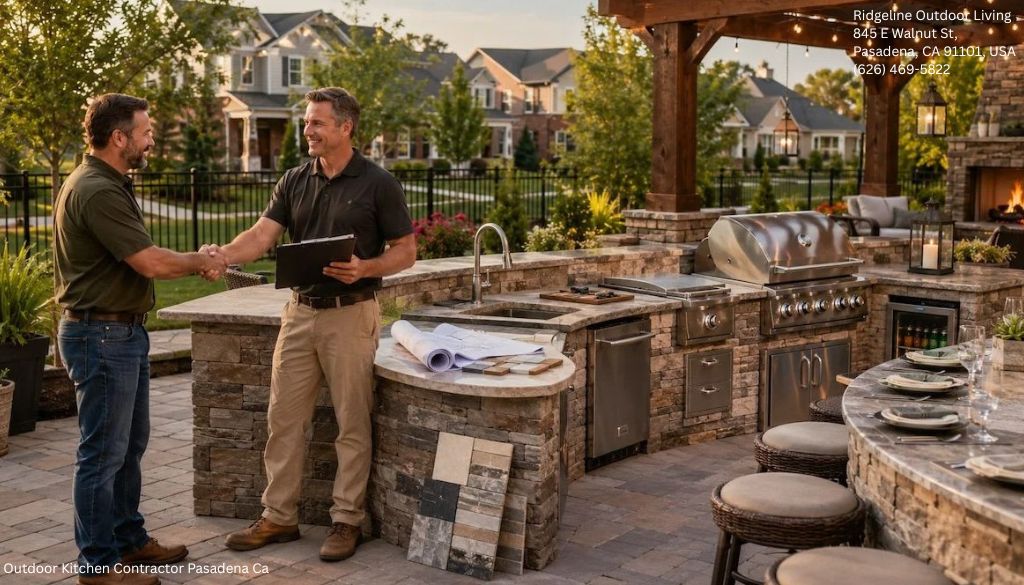
Entertaining gravitates to the water’s edge. Outdoor kitchens work best when they do not fight the pool for space. Keep the grill downwind of loungers and align counter runs so the cook faces guests. In Los Angeles, full outdoor kitchens typically range from 25,000 to 90,000 dollars depending on length, appliance selection, utilities, and whether there is a roofed structure. How Much Does an Outdoor Kitchen Cost in Los Angeles? Depends on site specifics: trenching across a finished deck to bring a new gas line can add 4,000 to 8,000 dollars on its own, while a prefabricated island on an existing patio may stay under 20,000.
Trends we see Los Angeles homeowners choosing include pizza ovens with rapid heat recovery, refrigerator drawers instead of a single door unit to reduce open time, and ceramic Kamado cookers for low‑and‑slow weekends. Ridgeline Outdoor Living’s Guide to Outdoor Kitchen Design narrows choices around lifestyle. If you cook twice a week, build for comfort and cleanup. If you host once a month with large groups, double the landing space and add a bar sink.
Turf, groundcover, and the splash‑zone reality
Artificial Turf vs Sod: What’s Best for Los Angeles Homes? Gets most pointed around pools. Natural sod cools the air and feels right under bare feet, yet it tracks clippings and needs careful irrigation to avoid overspray. Synthetic turf drains quickly and stays green through drought, but many infills hold heat and can feel too warm near a light deck in August. We mix strategies. A 24 to 36 inch band of decorative gravel or porcelain paver stepping path borders the coping, then a run of synthetic turf with a silica or TCool‑type infill to cut surface temps by 15 to 20 degrees. For families committed to natural grass, a hybrid Bermuda in a small zone away from the main splash area can work well with matched irrigation heads and drip around planting beds to prevent mist onto the pool.
Artificial Turf Installation: Everything Los Angeles Homeowners Should Know includes base prep that drains, the right seaming technique to avoid shiny lines, and a perimeter edge that does not trip a toe. Around water, we specify tufted products with perforations at a minimum 30 inches on center and ensure drainage rock underlay ties into the broader deck system.
Sound, privacy, and the feel of being tucked away
Pools are social magnets. With that comes sound. Fences help, but vegetation does more to soften high‑frequency chatter. Layered, evergreen plantings with varied leaf sizes disturb sound waves. Where neighbor windows loom, strategic screens integrated into the hardscape provide immediate privacy while hedges mature. We also use water for masking. A narrow wall‑hung scupper with a gentle, laminar fall creates a consistent hush that disappears once conversation starts, unlike splashy fountains that dominate the soundscape.
At property lines, we respect fire and building codes. The Most Popular Driveway Materials in Los Angeles often show how close impermeable surfaces can come to edges. In rear yards, we keep gas‑fired features the required distance from combustible structures and push blazing features away from property lines to reduce neighbor impact.
Safety and code: invisible protections
An elegant pool must also be safe and compliant. Los Angeles requires barriers, usually a perimeter fence or combined layers that can include an ASTM‑rated safety cover, self‑closing gates, door alarms, and window latches. We design fences as part of the architecture rather than afterthoughts, using steel pickets, tempered glass panels, or stucco walls with steel gates, always keeping climbable elements in check.
Deck finishes must be slip resistant when wet, and electrical systems need to be bonded with GFCI protection where required. Underwater lighting must be listed for submersion and serviced by accessible junction boxes above the flood plane. Pool equipment pads get concrete bases with clearances for servicing. For clients considering future mobility, we plan for handhold edges and accessible routes with slopes below 5 percent where possible. Ten Signs Your Yard Needs Better Drainage overlaps with safety too. Standing water near steps is a hazard, not just a nuisance.
Maintenance: design for the winds we get, not the ones we wish for
LA’s microclimates bring distinct maintenance needs. In Pasadena during Santa Ana events, oak leaves fall horizontally. We orient skimmers to catch prevailing winds and choose oversized models when feasible. A hidden auto‑fill saves time and stabilizes chemistry. Robotic cleaners reduce daily work, but we still design bench seats and gentle corners so debris cannot hide. Where pine needles are common, we skip slot drains with narrow openings that clog and install removable grates for quick clean‑outs.
We specify materials that age gracefully. Penetrating sealers reapply every 3 to 5 years without sheen. Stainless hardware gets a freshwater rinse zone if you are near the ocean. Outdoor cushions with solution‑dyed acrylics dry quickly and resist UV. The 10 Backyard Upgrades Worth the Investment often turn on durability: a storage niche for pool accessories, a discreet towel valet, or an outdoor shower with a linear drain that keeps grit out of the pool.
Three yard stories, three different problems solved
In Sherman Oaks, a family wanted a pool and open lawn for play on a tight 7,800 square foot lot. We carved a 30 by 12 lap lane with a baja shelf, then used 24 inch porcelain pavers in a running bond over an open‑graded base to create permeable joints. A slot drain along the coping tied to a gravel trench handled splash, while planting bands of Westringia and Lomandra kept leaves to a minimum. The budget hovered near 320,000 dollars, including a compact outdoor kitchen. It reads simple, yet the under‑deck drainage complexity is the quiet hero.
In Pacific Palisades, a modern home perched above a canyon needed noise control and a wind break. We set a 16 inch raised pool along the property edge, then built a perforated steel screen behind a louvered pergola to ease gusts without blocking views. The fire ribbon sits offset from the pool by 10 feet to prevent reflected heat. Planting combined Podocarpus columns with layered grasses, all irrigated by subsurface drip. With coastal air, we used marine‑grade lighting and a salt‑compatible porcelain coping. The space is serene even on blustery evenings.
In Silver Lake, a steep site asked for retention. We terraced with two engineered walls, each with subdrains weeped into a central collector. The pool’s backside doubles as the upper wall, with a waterproofing system applied to the exterior of the shell. Decking used Belgian bluestone with a light flamed finish for grip. Overflow from a spa weir drops into a rill that runs to a catch basin, masking street noise. Privacy comes from clumping bamboo and espaliered olive, keeping the skimmer clear of heavy drop. Permitting and engineering took four months, construction nine. The result feels inevitable, not forced.
Cost, value, and where to spend
What Does Hardscape Construction Cost in Los Angeles? Varies with site access, soil, and finish level. For pool surrounds, expect 45 to 120 dollars per square foot for quality decks, with porcelain and natural stone on the higher end, and complex site conditions adding to prep. Retaining walls on hillsides can range from 150 to 400 dollars per square foot of face depending on height, engineering, and waterproofing. Ten Hardscaping Features That Increase Property Value often include clean paver patios, well‑made seat walls, and layered lighting. Twelve Outdoor Living Features That Add the Most Value consistently point to flexible shade, an outdoor kitchen scaled to the home, and a fire feature that serves multiple seating zones.
Paver Patios vs Stamped Concrete: Pros and Cons play out against lifecycle costs. Pavers allow targeted repairs after a utility upgrade without patchwork scars. Stamped concrete keeps initial spend down but can develop pattern wear in high traffic lanes. The Best Hardscape Materials for Southern California Landscapes are the ones that can take heat and hose, accept a little neglect, and return to form with minimal fuss.
From sketch to first swim: how Ridgeline manages the arc
Design‑build only works if each handoff is clean. How Ridgeline Outdoor Living Approaches Design‑Build Landscaping starts with listening. We map uses first, then outline a concept anchored by circulation and zones: swim, sun, cook, dine, and retreat. We estimate ranges early using transparent allowances. If an Outdoor Kitchen Trends Los Angeles Homeowners Are Choosing item, like a louvered pergola, pushes spend, we balance elsewhere rather than shrink everything. Pool equipment sits where sound and service needs meet. We involve structural engineering for walls and hillside shells at schematic phase to catch budget drivers, not after demolition.
Permitting in LA can run from a few weeks to several months depending on jurisdiction and scope. HOA review can add a month. We sequence demo, grading, and underground utilities together to compact schedule time, then pour or set base layers before bringing in trades for finish carpentry, masonry, and planting. Many projects land in the 5 to 9 month build window once permits clear, longer on complex hillsides.
We keep clients informed with simple site plans that highlight the next two weeks and critical decisions, whether that is choosing among 15 Driveway Paving Ideas to Improve Curb Appeal for a front approach that ties to the backyard style, or finalizing 12 Water Feature Ideas for Luxury Los Angeles Backyards that scale to the pool. How Ridgeline Outdoor Living Creates Functional Outdoor Living Spaces is not a tagline. It is a habit of making each area do real work, day and night, weekday and weekend.
Bringing resort ease home, without the resort staff
Ten Ways to Create a Resort‑Style Backyard at Home get quoted often, yet the best resort feeling is low effort, high reward. Deep cushions in shaded spots, towels that have a place to go, pathways that dry quickly after a cannonball, and planting that looks good in January. Hillside owners benefit from The Complete Guide to Hillside Landscaping in Los Angeles because slopes can be tamed into terraces that expand living area, not just hold dirt. Families get better use from 12 Backyard Entertainment Features Every Homeowner Should Consider when those features are scaled, not simply multiplied.
If there is one thing to avoid, it is the trap laid out in 10 Backyard Renovation Mistakes to Avoid. Do not crowd the pool. Give it air. Let the planting breathe. Align cooking and dining within natural wind flow. Keep furniture out of traffic lanes from house to water. Choose materials that forgive wet feet and sunscreen. Small, correct moves outlast flashy flourishes.
Finally, remember that professional design saves time and money when it prevents rework. Why Professional Landscape Design Saves Time and Money rings truest after the first season. The pool that drains perfectly in a freak storm, the deck that stays cool when the forecast spikes, the hedge that screens without filling the skimmer, and the lighting that romanticizes without glare - those are the secrets, and they are not really secrets at all. They are the results of discipline applied to pleasure, which is exactly what a Los Angeles pool should be.