Design-build is a simple idea that is LA landscaping companies hard to execute well. One accountable team carries a project from first sketch to final sweep‑up, aligning design ambition with build reality. When that team knows Los Angeles soils, slopes, and permitting as well as they know stone, steel, and planting, backyards change fast and last longer. That is the promise we hold ourselves to at Ridgeline Outdoor Living.
What follows is a look inside our method. It is not a template. Every property and owner brings different constraints and goals, yet the discipline stays constant. Clarity at the front, coordination in the middle, and craftsmanship at the end. The payoffs are visible: fewer surprises, tighter schedules, stronger finishes, and outdoor spaces that work as hard as they look.
Why design‑build matters in Los Angeles
Southern California rewards outdoor investment. A paver terrace earns three seasons of dinners. A pergola turns a south‑facing patio into a daily room. An outdoor kitchen shortens the distance between a weeknight and a party. And drought‑tolerant landscaping curbs water bills without giving up color or texture. Those are reasons enough. Los Angeles adds its own stakes.
First, terrain. Hillside properties need retaining walls that do more than hold soil. They manage lateral loads, redirect stormwater, and tie into subdrains and weep holes. Wall height and surcharge trigger engineering and permits that can stall a project if not planned from day one. Second, water. The region’s clay lenses and compacted fills can trap runoff. Poor grading funnels showers into slab edges and garages. Drainage mistakes show up the first winter, and fixing them costs more than doing them right the first time. Third, rules. City and county jurisdictions impose stormwater management, low impact development measures, and assorted clearances. Inspections can be smooth or painful depending on drawings and sequencing. A design‑build team that carries code knowledge and constructability in the same brain is faster at navigating all of this.
The Ridgeline backbone
We keep the steps simple and we staff them with people who own their lane and respect the others. The sequence never changes, even as the details vary.
- Discovery and definition Concept and cost alignment Technical development and permitting Procurement and build sequencing Construction, commissioning, and handoff
Within that backbone, we tune scope for each site: a small flat‑lot patio moves faster than a hillside with multiple tiers and access limits, but both get the same rigor.
What we do before we design
Discovery is not a quick walk and a few photos. We run a structured intake. A lead designer and a superintendent visit together. One looks for composition and use patterns, the other for access, utilities, and risk.
We flag property lines and easements, then test site drainage with a hose if the weather is dry. On older homes we inspect weep screeds and slab edges for prior water staining. Clay soils in parts of Los Angeles behave differently across the year. If a yard shows heave or cracking, we pull a soil report or at least probe depths and density to decide on base sections. We map overhead clearances and underground conflicts. Natural gas lines, sewer laterals, shallow irrigation, and old low‑voltage cable can cut an easy day short.
Homeowner goals get equal time. Some clients want a resort‑style backyard at home with a pool, fire bowls, and a fifteen‑seat bar. Others want a calm dining terrace that holds twelve comfortably and a grilling station that does not dominate the yard. We ask what a good Saturday looks like in the space. The answers shape zones, not just features.
Turning intent into options you can price and choose
Concept design is where trade‑offs get real. We never present a single option at the first pass. Two or three schemes, each honest about cost and maintenance, help owners choose with eyes open.
On surfacing, we talk through paver patios vs stamped concrete, because it is a common fork. Pavers cost more in material and base prep, often landing between 22 and 40 dollars per square foot for standard systems, with premium formats higher. They bring modular repairability, colorfastness, and joints that relieve cracking. Stamped concrete usually ranges from 16 to 28 dollars per square foot depending on color, pattern, and steel. It gives broad planes and lower initial cost, but it wants control joints and will eventually crack. We walk clients over both, ideally on recent projects, and explain how sun exposure, furniture loads, and drainage should influence the call.
Artificial turf vs sod is another frequent decision. Turf looks crisp year‑round and pairs well with tight paving, but heat gain and reflection near light stucco can raise surface temperatures into the 140s on peak afternoons. Quality infill and breathable pads help, and we set realistic expectations about brushing and sanitation. Premium turf installs in Los Angeles usually fall in the 18 to 28 dollars per square foot range, depending on base, edging, and access. Sod costs less up front, often 3 to 6 dollars per square foot installed with soil prep and irrigation, yet it demands regular water and fertilizing. We often blend the two, using turf for utility zones or putting greens and warm‑season drought‑tolerant sod for the rest.
Shade and structure need early clarity. Pergolas vs covered patios is not only a style choice. A pergola with adjustable louvers gives control without introducing heavy roof loading at the house tie‑in. A solid roof extends indoor finishes outside, but it adds permitting complexity and cost. We sketch both early and price them cleanly.
Lighting is part of concept, not an afterthought. Path and step safety, face‑lit risers, up‑lighting on focal trees, low‑glare task lighting at grills, and subtle washes on walls set the tone and extend use. We stand firm on avoiding the common outdoor lighting mistakes that reduce curb appeal, like over‑accenting every plant or placing floodlights at eye level.
Pricing that shows the math
Los Angeles costs span wide ranges because of access, foundations, and finish choices. We share numbers early and we show line‑item clarity so owners can see where money goes. An outdoor kitchen is a good example. The question How much does an outdoor kitchen cost in Los Angeles has an honest answer, but it starts with scope. A compact straight run with a 32‑inch grill, access doors, a small fridge, stucco cladding, and a concrete counter might land around 18,000 to 28,000 dollars when gas, power, and permits are included. Add a sink with proper drainage and trap, upgrade to a 42‑inch grill with a sear station, swap stucco for stone veneer, and extend the counter for seating, and you will quickly move into the 35,000 to 55,000 dollar band. Complex island shapes, steel frames, porcelain slabs, and overhead structure can push higher. The drivers are utilities, appliances, cladding, and counters. We document each clearly, and we present alternates so clients can tune performance without gutting aesthetics.
Fire features are similar. A clean rectangular fire pit with a match‑lit burner, stucco finish, and crushed glass media is one cost. A certified burner pan with electronic ignition, flame sensing, and a wind‑resistant trough in a custom concrete or stone surround is another. For homeowners who entertain year‑round, we show 12 backyard fire pit ideas that span styles and budgets, from sunken conversation pits near a pool to linear tables that double as dining edges.
We also cover the quiet items that protect your home. A French drain explained clearly is a trench with a perforated pipe wrapped in fabric and gravel, placed at the right depth and tied to a lawful discharge. It is not a cure‑all, and it must be paired with grading that gives you the first 5 to 10 feet of positive slope away from structures. When budgeting, we include drainage lines, catch basins, pop‑up emitters, sump pumps if gravity fails, and restoration. Skipping or under‑scoping drainage is the most expensive way to save money.
Business Name: Ridgeline Outdoor Living
Address: 845 E Walnut St, Pasadena, CA 91101, United States
Phone: (626) 469-5822
Ridgeline Outdoor Living
Ridgeline Outdoor Living is a Pasadena-based landscape design-build company serving Greater Los Angeles with custom outdoor living, hardscape, and drought-tolerant landscape solutions. The company specializes in patios, retaining walls, outdoor kitchens, drainage, hillside projects, and turnkey landscape construction, handling projects from design and permitting through final build and warranty.
845 E Walnut St, Pasadena, CA 91101, USA
Business Hours:
- Monday – Saturday: 8:00 AM – 6:00 PM
- Sunday: Closed
Follow Us:
Technical development that satisfies engineering and the city
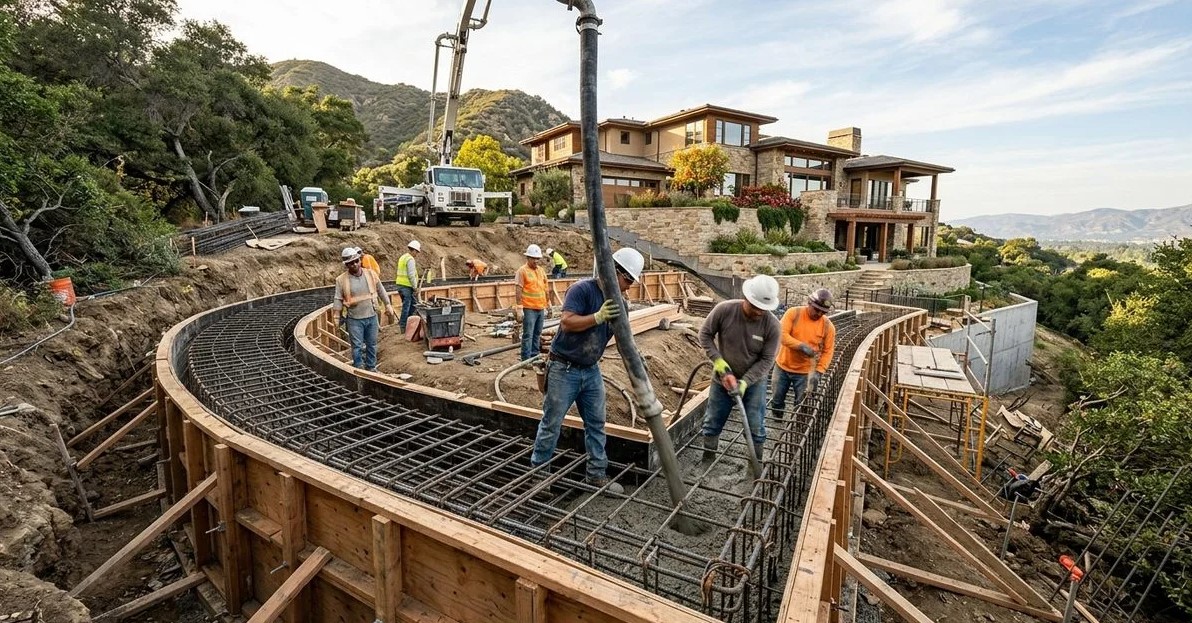
When a concept is selected and rough costs align, we advance drawings for engineering and permitting. Retaining walls for hillside properties demand particular care. In Los Angeles, unreinforced gravity walls may be permitted up to a modest height depending on jurisdiction, but anything near 3 to 4 feet with surcharge from slopes, structures, or driveways deserves structural design. We coordinate soils parameters, drainage composites, geogrid layers for segmental systems, and we tie subdrains into lawful discharge points. We also respect aesthetics. A retaining wall can be a garden backdrop, not just an engineering solution.
Low Impact Development rules often require that new impervious surfaces be offset with infiltration or capture. Permeable pavers count favorably in many cases, provided the base section and underdrain are designed as a system. We weigh this option early. If the soil percolates, permeable pavers can be both a finish and a stormwater measure.
Lighting submittals address transformer sizing, voltage drop, and Title 24 compliance where relevant. Gas line sizing accounts for total BTUs across grills, side burners, fireplaces, and pool heaters if present. Electrical load calculations consider dedicated circuits for refrigeration, lighting zones, pumps, and receptacles with GFCI protection in the right locations. Submittals move faster when they are complete, so we package details rather than push questions to the counter.
Sequencing and procurement, the unglamorous work that saves weeks
The fastest builds are not the ones with the biggest crews. They are the jobs where materials arrive before crews need them and inspections are passed the first time. We front‑load long‑lead orders like porcelain pavers, louvers, and specialty appliances as soon as deposits clear. We keep a standing inventory of base aggregates and common paver styles so small changes do not derail a week. For custom concrete, we book pump trucks in advance and align pour days with weather windows to avoid hot‑day finish issues.
We also set expectations with neighbors. If access crosses a shared drive or if hauling will trigger street parking limits, we deliver notices 48 hours ahead and coordinate with waste collection days. Clean sites keep crews efficient. A superintendent visits daily, checks compaction numbers, verifies slopes with a level, and signs off before the next layer covers the work.
Building the bones so the finishes last
Most clients judge a project by the finishes. We judge it by what is buried. Subgrade preparation, compaction, and drainage determine whether a patio holds flat lines five years out. We excavate to design depth, proof‑roll subgrade, and add geotextile under base where soil transitions justify it. Paver sections in Los Angeles typically run 4 to 8 inches of compacted Class 2 base over geotextile on poor soils, with bedding sand or an open‑graded layer depending on system. Concrete patios get proper reinforcement, control joint spacing tied to slab thickness, and isolation joints at structures. For both, we build consistent 1 to 2 percent slopes away from the home and toward collection points, avoiding birdbaths and trip‑edge transitions.
At the house, we respect clearances. We never bury weep screeds, and we maintain the correct vertical separation from grade to stucco or siding. At steps, we keep consistent riser heights and tread depths, and we light faces to avoid missteps at night. For outdoor kitchens, we pull exhaust clearances, protect combustible surfaces, and ventilate cavities so heat and propane do not accumulate.
Polymeric sand and sealers are chosen to match use. Around pools, we avoid slippery finishes and pick sealers that breathe. Under fire features, we protect finishes from soot and radiant heat with liners where appropriate.
Planting and water that suit the climate, not just the photo
Drought‑tolerant landscaping is not a compromise if it is designed with attention to color, structure, and seasonal interest. The best drought‑tolerant plants for Los Angeles yards have evolved for heat and poor soils, yet they can read refined. We blend groundcovers like Dymondia or Silver Carpet for tight joints, grasses such as Lomandra and Deer Grass for movement, and structural plants like Agave, Phormium, and Aloe for form and bloom. California natives like Ceanothus, Arctostaphylos, and Salvia support pollinators and anchor slopes. Rosemary and Westringia provide low hedges with little water.
Irrigation design matters more than the plant list. We run drip where possible, often with pressure‑compensating emitters and check valves to handle grade changes on hillside landscaping. Zones are separated by plant water needs and sun exposure. A smart controller tied to local weather data saves water and protects plants during heat spells. Mulch, soil amendment, and proper planting depth round out the system.
Water features, used sparingly, add calm without drama. Simple scuppers into runnels, basalt columns with recirculating pumps, and narrow rills that edge a dining terrace deliver movement without noise. We specify auto‑fills, easy‑clean strainers, and concealed valves for maintenance.
Lighting that flatters, not blinds
Good lighting edits the night. We use warm temperatures around 2700K for most applications, reserving 3000K for task zones like grill stations. Fixtures are shielded so eyes see light on surfaces, not the source. Steps get soft face lights, not bright floods. We tuck downlights into pergolas for dining, avoiding glare on plates. Moonlighting through tree canopies creates slow movement across paving and lawn, which feels cooler in August and more alive in December. We separate zones to dim or switch independently, so a quiet evening feels different from a party.
Hardscaping that adds value without chasing trends
Real estate agents and appraisers will tell you the same thing we see after years on site. Certain outdoor improvements consistently help value. Paver driveways are one. They resist oil staining better than plain concrete when sealed, and individual units can be lifted and replaced. Patterns and borders frame entries and improve curb appeal. We keep driveways within a palette that respects the home, not whatever is trending on social media.
Outdoor kitchens, covered dining, and functional seating raise daily use. Fire and water features, installed in balance, create anchors for gatherings. Retaining walls that reclaim unusable slope into flat terraces unlock square footage buyers value. Drainage upgrades rarely get photo time, yet they protect everything you built. Our counsel is the same whether the home is a starter or a forever house: choose 10 hardscaping features that increase property value by how they support use and reduce maintenance, not just by how landscaping guides they photograph on day one.
Two quick project snapshots
A Hollywood Hills client came to us with a sliding slope and a tired deck. The survey showed a 9‑foot drop across 40 feet, shallow bedrock on the left, and fill on the right. The prior owner had stacked loose block as a “wall,” and winter storms carved channels around it. Our design‑build solution combined a tiered segmental retaining wall with geogrid reinforcement, a French drain behind each tier, and a permeable paver terrace that bled water into a crushed rock reservoir before feeding a controlled outlet. We set a recessed linear fire feature into the upper terrace to keep views clean. The engineering and permitting ran in parallel with material selection because the same team handled both. Six months after finish, a heavy storm hit. The neighbor called to ask who built the yard because his had puddles and ours shed cleanly.
On a flat lot in Sherman Oaks, the brief was the opposite: create a resort feel without installing a pool. We laid a 700‑square‑foot porcelain paver deck on pedestals to keep the plane true and heat gain low, tucked a twelve‑seat dining space under an aluminum pergola with motorized louvers, and built a 14‑foot outdoor kitchen with a 36‑inch grill, fridge, storage, and a hidden trash pull. A sculptural basalt trio bubbled near a cluster of Ceanothus and native grasses, tying sound and movement together. The owners host weekly dinners for eight to ten, and the space performs without fuss. Cleaning is a hose and a broom. Gas and power were sized so nothing trips. The design sketches looked simple at the start, which is the point. The built result feels inevitable.
Timelines that respect your calendar
Duration depends on scope and jurisdiction, yet our averages are consistent. A compact backyard renovation with a paver patio, lighting, planting, and a small grill station often runs 6 to 10 weeks in the field after permitting. Add retaining walls, structural shade, or complicated drainage, and you may push to 12 to 18 weeks. Pools, complex covered patios, and full‑yard rebuilds can run a season or more when engineering and inspections stack up. The reason we protect the sequencing is simple. If you start without permits in hand or with materials on backorder, you will spend more time watching an empty yard than watching progress.
Avoiding the mistakes that steal money and time
We have rebuilt plenty of yards designed without a builder’s eye. The patterns are common. A terrace slopes toward the house because someone chased a perfect level line instead of a working grade. A drain connects to nowhere because a contractor assumed gravity would find a way. A stamped concrete patio looks great for a year, then cracks climb across furniture legs because control joints were value‑engineered out. Utility loads get ignored, and an outdoor kitchen starves a pool heater once both run on a cool evening.
Design‑build shortens that list. When the estimator, the designer, and the superintendent sit at the same table, grading lines match door thresholds, French drains get lawful discharge, and control joints align with patterns you will not notice. We also put a superintendent in preconstruction meetings to call out site access, tree protection, neighbor constraints, and haul routes before they become change orders. Change orders still happen, but they come from owner‑driven scope changes, not from errors.
Making the right material calls, driveway to dining
Material choice is a lever we pull with clients, not for them. Paver patios vs stamped concrete is only one example. Driveway materials in Los Angeles include concrete, pavers, and occasionally natural stone on high‑end homes. Concrete is clean and cost‑effective, yet joints and cracking are real. Pavers cost more but look sharp and ease maintenance. Natural stone is beautiful but often slippery when wet and sensitive to deicing salts in mountain fringe neighborhoods. We explore how you use the space, how hot it gets, and how much time you want to spend on upkeep.
For outdoor dining design, we think in zones and adjacencies. Kitchen counters should face guests, not push a cook’s back to the party. Seating works best with 36 inches behind chairs for circulation. We hide task lighting in pergolas and set dimmable ambient light at the perimeter so plates glow but eyes relax. We plan heaters with clearance around fabrics and powder coatings that can take the heat.
What retaining walls really need to do
Homeowners often see retaining walls as backdrops. On hillside properties, they are the backbone. The complete guide to retaining walls in Los Angeles would run long, but three principles carry the weight. First, drainage behind the wall deserves as much attention as the face. Without it, hydrostatic pressure builds and tops a wall in a single storm. Second, reinforcement and footing design must match soil and load, not guesswork. Third, finishes should respect the home’s vocabulary and the neighborhood. A well‑detailed wall with a cap that throws water cleanly and a face that does not glare in afternoon light becomes a positive presence.
Two minutes on due diligence
Hiring any landscape contractor is a trust exercise. Ask questions that probe both design and build competence. Five that matter:
- What are the biggest risks you see on this site, and how will you manage them? How will you handle drainage, and where will water go lawfully? Who will be the superintendent on my job, and how often will they be on site? Can you show line‑item pricing with alternates so I can make informed trade‑offs? What inspections and permits will this scope trigger in my jurisdiction?
The answers tell you if the team is guessing or bringing lived experience. If a contractor cannot explain French drains, subgrade compaction, or gas sizing in plain language, keep interviewing.
Handoff and the first year of use
A project is not finished when the last plant goes in. We provide as‑built drawings that show valves, wires, and drains so future work does not break hidden systems. We train owners on controllers, filters, and sealers. We schedule a 60‑ to 90‑day walkthrough to tune irrigation after plants root in and to adjust lighting aim once night patterns are clear. For pavers, we inspect joint sand and add where traffic has settled it. For outdoor kitchens, we check burner ports and ignition, because dust and cobwebs are a fact of life outdoors.
Maintenance is modest when systems are designed well. A quick monthly rinse, a quarterly brush of turf or a light fertilizer touch for sod, a seasonal prune for natives after bloom, and an annual check of transformers and timers carry most spaces. The goal is the same as day one. Beauty, function, and durability, with less fuss.
When a backyard becomes a daily room
The best proof of design‑build done right is not an after photo. It is the calendar inside the home. If a family uses a yard three nights a week instead of once a month, if teenagers invite friends over because the fire pit draws them, if grandparents can walk every path safely at night, we did our job. Ridgeline Outdoor Living designs stunning outdoor spaces by aligning ideas with engineering, budget with build, and materials with climate. We create functional outdoor living spaces that look good on day one and keep working in year five, year ten, and the rainy week that always comes after the first heat wave.
If you are weighing backyard upgrades worth the investment, or wondering what hardscape construction costs in Los Angeles for your home, start with a conversation that balances ambition with constraint. A disciplined design‑build method will take you the rest of the way.