Los Angeles is a city of ridgelines, not rectangles. From Silver Lake to Studio City, from Pacific Palisades to Mount Washington, backyards rarely sit flat. They tip toward canyons, step down to views, or leap up behind the house. That topography can feel like an obstacle until it becomes the organizing force of the design. At Ridgeline Outdoor Living, we work where gravity tries to pull every choice downhill. Success depends on reading the slope, managing water, and building spaces that feel natural to the land.
Business Name: Ridgeline Outdoor Living
Address: 845 E Walnut St, Pasadena, CA 91101, United States
Phone: (626) 469-5822
Ridgeline Outdoor Living
Ridgeline Outdoor Living is a Pasadena-based landscape design-build company serving Greater Los Angeles with custom outdoor living, hardscape, and drought-tolerant landscape solutions. The company specializes in patios, retaining walls, outdoor kitchens, drainage, hillside projects, and turnkey landscape construction, handling projects from design and permitting through final build and warranty.
845 E Walnut St, Pasadena, CA 91101, USA
Business Hours:
- Monday – Saturday: 8:00 AM – 6:00 PM
- Sunday: Closed
Follow Us:
Before you jump to the fun part, pause and study how your hillside behaves. Sun hits one face like a spotlight. Santa Ana winds rake another. Clay swells after rain. Fill soils settle in dry spells. Roots knit soil together while unanchored surfaces ravel. Every element in a hillside design answers to those conditions.
A quick way to read your site
Decisions are better when they are grounded in facts on the ground. On hillside properties we always start with a walk that looks and listens for the following:
- Where water starts, travels, and exits during a storm, including roof downspouts and driveway runoff Slope angle and aspect, noting areas steeper than 2 to 1 and faces that bake in afternoon sun Soil type and history, especially expansive clay or imported fill Access for materials and equipment without destabilizing the slope Wildfire exposure, utilities, and the proximity of neighbors below and above
A soils report and, on steeper or mapped zones, a geotechnical evaluation are not just paperwork. They are the blueprint of what the slope will permit. With that in mind, here are ten ideas that have served our clients well across Los Angeles hillsides.
1. Create terraces that work like rooms, not ledges
Retaining walls make flat space where none exists, but the difference between a wall and a terrace is use. A terrace earns its place when it holds a dining table, a small lawn for kids, or a shaded bench with a city view. On a 30 percent slope, two or three platforms separated by garden bands often feel more comfortable than a single massive cut.
Wall system selection depends on height, soils, and drainage. We use:
- Segmental gravity walls with geogrid for 2 to 6 foot lifts on many residential slopes. They flex slightly, which is helpful in expansive clays. Reinforced CMU with steel and concrete on taller or load bearing conditions. Good when terraces support a spa, kitchen, or parking. Soil nail or tieback walls where we need to pin into competent material without oversized footings.
Every retaining wall for hillside properties needs clean gravel backfill, a perforated drain, and a daylight outlet or approved tie in. Skipping drainage is how walls die early. When clients ask how retaining walls prevent erosion, we explain that they slow water to a walk, move it where we want, and hold soil in place long enough for roots to knit.
The face matters too. Split face block can look heavy if used in long runs. We often alternate with planting bands or veneer a portion with stone where you see it daily, then keep the hidden face utilitarian to manage cost.
2. Build switchback steps that invite you out, not just up
People gravitate to gentle stairs. A 6 to 7 inch rise with 12 to 16 inch treads makes a comfortable climb. On a steep lot we lay out switchbacks that land on micro terraces. Those landings become moments for a lemon tree, an herb box, or a view stool. Poured in place concrete holds up but can feel stark. We alternate with precast treads on compacted bases, corten risers, or stone slab steps when the budget allows.
Railings are not optional once you start pushing height. Discreet steel guardrails or cable rail disappear into foliage. Add low voltage lighting at every third tread, tucked under nosings, and you turn a cautious path into an evening walk. That touches on 10 outdoor lighting ideas many homeowners consider, but on hillsides the primary function is safe passage. Glare control is essential for neighbors both above and below.
3. Plant deep rooted, water wise palettes that hold the slope
Drought tolerant does more than save water. The right roots act like a living net. The Best Drought-Tolerant Plants for Los Angeles yards tend to have strong fibrous systems that stitch the skin of the hill together. We group by exposure and irrigation zone, then plant densely at the start.
Ice plant is not a cure all. It is shallow rooted and can slip on steep faces. We mix sages, buckwheat, manzanita, and ceanothus on hot faces, and toyon or coffeeberry on cooler exposures. Ornamental grasses like Muhlenbergia and Festuca add texture and anchor soil. In wildfire zones we keep spacing open around structures and use gravel or DG bands as breaks. The Ultimate Guide to Drought-Tolerant Landscaping in Los Angeles belongs on the reading list for any hillside owner, because water savings, erosion resistance, and fire wise spacing all intersect here.
Irrigation strategy matters. On slopes, avoid head to head spray that blows away in wind. We specify pressure compensated drip, looped laterals, and check valves to stop low point drainage. A slope sensor reduces run times when fog or marine layer brings free moisture.
4. Move water quietly with layered drainage
If a hillside has a villain, it is unmanaged water. French drains explained simply are trenches with perforated pipe and gravel that intercept groundwater or perched water behind walls. We pair those with surface inlets to capture flow from patios and paths. Bioswales below terraces slow and filter runoff before it leaves the property. On older homes we often discover downspouts that dump against a slope. We tie them into solid pipe and route them to a safe discharge.
When a client asks how to solve common yard drainage problems, we walk in the rain. That is when you find the rill that cuts across the path or the puddle that forms at the base of the lower wall. Ten signs your yard needs better drainage range from moss on north steps to soil staining at wall weep holes. Solve them once with an integrated map, not a patchwork of afterthoughts.
Permeable pavers earn their keep on terraces because they handle light movement and let water percolate. In our experience, permeable assemblies feel about 15 to 25 percent more expensive than standard pavers up front, but they save on downstream drainage hardware and keep runoff where it can soak in.
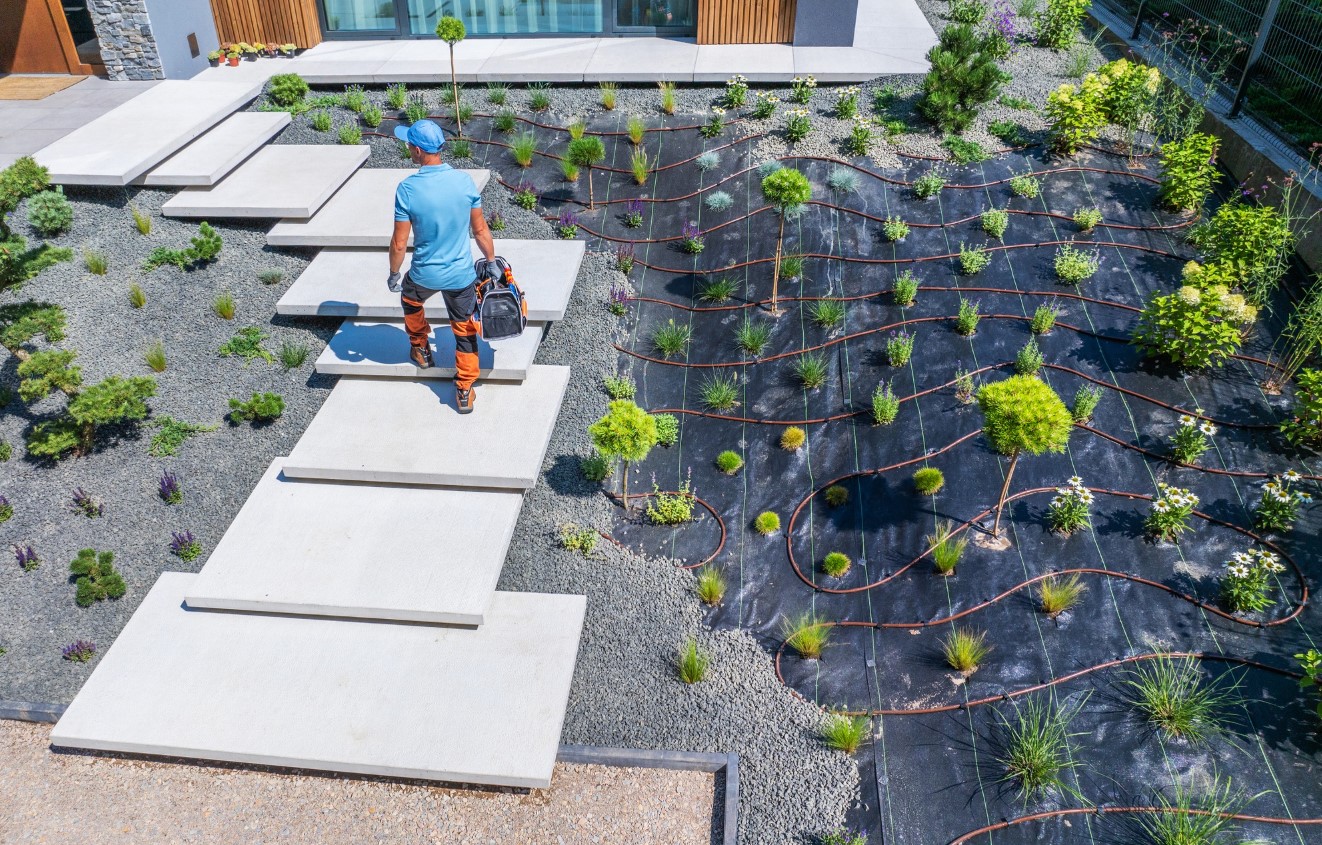
5. Extend living space with caisson supported decks
On very steep lots, decks can float out where soil would be too risky to cut. We work with engineers to set drilled concrete piers, often 18 to 24 inches in diameter, down to bearing strata. Grade beams tie the system together. A well built hillside deck feels solid underfoot, not springy, and can frame a priceless slice of the city.
Costs vary by access and pier depth, but homeowners should expect a hillside deck with caissons to land in the 200 to 350 dollars per square foot range in Los Angeles as of recent projects, including structure, decking, and rail. When comparing pergolas vs covered patios, decks sometimes serve as the only viable platform for either, and shade makes the space useful more months of the year.
6. Tuck in paver patios that terrace with purpose
The charm of hillside living is discovering spaces, not one big lawn. We carve small paver patios into the slope with low seat walls at the back and a guardrail or planting at the front. Patterns from 15 paver patio designs Los Angeles homeowners love show up differently on compact terraces than on large courts. Larger format pavers reduce joints and feel clean. On modest budgets, a smaller paver with a soldier course edge reads finished and holds shape.
Clients ask about paver patios vs stamped concrete. Pavers flex at joints and can be reset if a corner settles. Stamped concrete delivers a monolithic surface with fewer lines but can crack and is harder to repair invisibly. On hillsides with marginal soils, the forgiving nature of pavers is often the deciding factor.
7. Use fire features that respect wind, code, and neighbors
Fire belongs on a terrace when it is properly sited and controlled. We avoid placing open flames on upper edges where wind whips it around and where embers can carry downhill. A recessed fire pit or linear burner set into a low wall creates warmth without too much vertical flame. Within Los Angeles, setbacks from structures and brush clearance rules apply, and some high fire zones restrict wood burning. Gas with a shutoff at the house and a listed burner pan is the norm.
From 12 backyard fire pit ideas for entertaining year round, the ones that work best on slopes center on conversation. We keep seat walls 18 to 20 inches high and 18 to 24 inches deep. We bend benches around the pit on tight terraces so every seat faces the view. Wind screens of tempered glass can make exposed decks usable after sunset.
8. Build outdoor kitchens that anchor to the hill
An outdoor kitchen on a slope needs a firm back and a level front. Retaining walls do double duty here. We design the wall to hold grade and to receive utilities, then float the kitchen island just forward of it. That arrangement reduces the depth of cuts and keeps the working zone out of the steepest part of the slope.
How much landscape contractors Los Angeles does an outdoor kitchen cost in Los Angeles depends on access, utilities, and finishes. On level sites, a straightforward grill, side burner, and undercounter storage with stucco or tile finish often falls in the 15,000 to 30,000 dollar range. On hillside terraces with utility runs up or down the slope, structural slabs, and upgraded finishes like porcelain, stone, or steel, 35,000 to 75,000 is common. Outdoor kitchen trends Los Angeles homeowners are choosing lean toward compact but high performance: a quality grill, a narrow fridge, a single appliance like a pizza oven or plancha, and a shaded prep area. We plan clearances for safe movement, especially near edges, and integrate task lighting tied into the broader low voltage system. Ridgeline Outdoor Living’s guide to outdoor kitchen design places safety and ergonomics ahead of extras.
9. Stabilize surfaces with living and structural armor
Erosion control is not a single product you install once. It is a staged approach. On raw cuts we use jute or coir netting anchored in shallow trenches at the top and bottom. We plant through it so roots replace the fabric as it degrades. Where water concentrates, we add rock check dams or coir logs to slow the pace. Slopes steeper than 2 to 1 often need both structure and plants. A low wall with a planted bench above and below takes the angle out of the face while giving roots time to do their work.
Artificial turf tempts on slopes because it stays green, but it needs careful base prep and edge restraint to keep panels from creeping. It can shine in small terrace pads where real lawn would struggle, but we avoid large synthetic carpets on steep faces. When clients weigh artificial turf vs sod for Los Angeles homes, the best answer on hillsides is usually a hybrid: a small, flat synthetic play or lounge area with surrounding drought tolerant planting that holds soil and looks alive.
10. Light with restraint for safety and a sense of place
Outdoor lighting ideas for Los Angeles landscapes often focus on drama. On hillsides, restraint wins. Shielded step lights, under cap wall lights, and low path lights prevent glare for both your eyes and your neighbors below. We light grade changes and handholds first, then consider a few accents for trees or stone. Color temperature matters. A consistent warm white, often around 2700 to 3000 Kelvin, makes materials look good and avoids a patchwork feel.
We avoid uplighting in high fire areas with overhead fuels and follow dark sky principles where practical. A good transformer with multi tap outputs lets us balance runs on long, vertical sites. Dimming and zoning turn a path into a quiet ribbon after hours. Ten outdoor lighting mistakes that reduce curb appeal usually begin with overlighting. On a slope, that mistake becomes a hillside billboard.
Materials that forgive movement
Steep sites move. Expansive clay swells and shrinks. Fill settles. Seasonal moisture swings open and close joints. Materials that allow micro movement age better. Segmental retaining systems, permeable pavers with polymeric sand, and decks with hidden fasteners adapt. Rigid finishes like long, unbroken concrete slabs or mortar set flagstone over marginal base will show cracks sooner.
Decomposed granite with a stabilizer works well on interior terraces and paths, but it requires edge restraint and tight compaction in lifts. On steeper pitches we break runs with bands of stone or steel edging to stop raveling. We use flexible joint sealants at interfaces between hardscape and the house to absorb movement without tearing.
Two hillside case snapshots
A family in Eagle Rock had a backyard that dropped 18 feet over a depth of 48 feet. During a winter storm, water poured off the neighbor’s driveway onto their slope, cutting rills and carrying fines onto the patio. The wish list included a small lawn, a grill, and a place to sit under shade with a view of the San Gabriels.
We set two terraces: a 15 by 20 foot upper dining deck on caissons close to the house and a 14 by 14 foot lower paver pad framed by a low retaining wall. Between them we built a switchback stair with a resting landing flanked by planter boxes. A perforated collector intercepted water at the property line and routed it to a vegetated swale along the lower edge. Planting focused on sages, buckwheat, and toyon, with a narrow synthetic lawn panel for cornhole. The budget landed near 210,000 dollars, driven by caisson depth of 18 feet and crane time for steel. Two years later the slope is stable, and the family eats outside eight months of the year.
In Pacific Palisades, a narrow side yard wrapped a hill to a canyon overlook. The client wanted a fire feature, but wind made the corner inhospitable after sunset. We tucked a linear burner into a back wall, added a 30 inch tall wind screen of laminated glass, and carved a curved seat into the bank behind it. A low, permeable paver terrace with a hidden drain handled the occasional coastal downpour. Lighting was limited to four step lights and two undercap fixtures. Cost stayed contained at 78,000 dollars by using a segmental wall system and keeping finish choices focused. The space became a sheltered nook rather than a wind trap.
Permitting and process in Los Angeles
Hillside work in Los Angeles moves at the pace of paperwork as much as craftsmanship. Expect to coordinate with LADBS for structural review and, on mapped hillsides or steeper slopes, to secure a soils and geology sign off. If your project exports or imports a meaningful volume of soil, a haul route review may come into play. Utility upgrades on slopes, especially gas for a fire feature or kitchen, can trigger additional inspections. Neighbors downhill worry about drainage and stability for good reason. Bringing them into the conversation early reduces friction and may speed the review.
Here is a simple document checklist we use to keep approvals organized:
- Current survey with topography and property lines, including easements Soils and geotechnical report with recommendations Structural plans for walls, decks, and footings Drainage plan with hydrology narrative and discharge details Landscape and irrigation plan with planting, lighting, and water budget
The complete guide to hillside landscaping in Los Angeles would devote chapters to permitting alone, but at a minimum, build time into your schedule. Four to twelve weeks for reviews is common, and complex decks or tall walls can extend beyond that.
Budgeting choices that pay you back
Ten hardscaping features that increase property value in hillside contexts start with those that unlock use. A safe stair and landing system, a durable terrace with a view, and tidy drainage you never notice day to day often return more than high ticket luxuries that are hard to reach or use. Where to spend:
- Structure where it counts. Properly engineered walls, caissons, and drains. Surfaces you touch daily. Handrails that feel secure, treads that fit your stride. Shade and shelter. A compact pergola or canopy at the most used terrace.
Where to save without regret:
- Finish every vertical face only where you see it. Let hidden walls stay utilitarian. Choose pavers over slab in movement prone zones. Keep outdoor kitchens compact and focused on the one or two appliances you will use weekly.
The question what does hardscape construction cost in Los Angeles has a wide answer, but on hillsides, plan for 20 to 40 percent more than on flat lots of the same scope, mainly due to access, structure, and logistics. Crane days, hand carry routes, and staged pours add real time.
Maintenance, seasons, and living with the hill
A hillside landscape thrives when tended lightly but consistently. Drip systems need seasonal checks for clogs and pressure. After the first winter, tighten and top off polymeric sand in paver joints and add gravel at wall weep outlets if fines wash out. Prune for structure and airflow, not just for size. In high fire severity zones, maintain defensible space and clean leaf litter from under decks.
After storm events, walk your drains. If you see fine sediment, you found a weak point to fortify. If a French drain flows for days after rain, groundwater is moving along that plane. It may be doing exactly what it should. landscaping guides Record those observations and share them with your builder or maintenance team.
How Ridgeline approaches design build on slopes
We do our best work when we are at the table from the first sketch to the last plant. How Ridgeline Outdoor Living creates functional outdoor living spaces on hillsides rests on three habits.
First, we align the wish list to what the land will support. Not every slope wants a lawn or a pool. Plenty of properties come alive with a modest terrace, clever circulation, and plants that glow in late light. Pool landscaping ideas for Los Angeles homes often need to pivot to plunge pools or spas on smaller terraces rather than large basins carved from a hill.
Second, we build a water narrative before we draw a single wall. The plan shows where each gallon falls, flows, soaks, and exits. Common landscape drainage problems and their solutions look simple on paper but need to be choreographed with the rest of the build.
Third, we sequence construction so the hill is never naked for long. Cuts and walls come with immediate drainage. Temporary erosion controls go in before the first forecast rain. Plants follow structure as quickly as irrigation can support them.
The reward of a hillside done right
The best hillside landscapes in Los Angeles feel inevitable, as if the house and garden always grew this way. You rise a few steps to a breakfast ledge shaded by a light pergola. At midday you wander down to a cool bench behind grasses that nod in the breeze. After dusk, a ribbon of low lights guides you up without glare. Water goes where it should, roots hold the ground, and the hill reads as one composition rather than a contest.
Designing and building on slopes asks for judgment. There are trade offs everywhere. When done with care, the result is a set of outdoor rooms you actually use, stitched into a hillside that stays put through dry spells and winter storms. That is the promise of hillside landscaping, and the standard we hold our work to at Ridgeline.